

Remember when your epic loot, rare skins, and grind-it-out levels were basically rented from whichever publisher owned the servers? Yeah, that era is fading. Blockchain gaming has spent the last few years dragging the industry out of its feudal model — where you pay, play, and pray the company doesn't pull the plug — into something closer to actual ownership. In 2026, the sector isn't just surviving the post-bubble hangover; it's getting smarter, faster, and weirdly fun.
The pitch is simple: tokens you can trade, NFTs you actually own, and on-chain economies where the value you create doesn't evaporate when a studio shutters its servers. The execution? That's where things get spicy.
Why Blockchain Gaming Still Matters in 2026
Crypto gaming gets dunked on a lot — too speculative, too clunky, too obsessed with charts over gameplay. Fair criticisms, historically. But the core thesis hasn't budged: blockchain technology flips the traditional gaming model on its head by giving players verifiable ownership of their in-game assets. If a developer rage-quits a project, your sword, your land plot, your character — they don't vanish into a corporate void. They live on-chain.
That's a structural shift, not a marketing slogan. And it's why crypto gaming remains one of the most promising sectors in Web3, even after the speculative dust has settled. Studios are finally building games that prioritize fun first and tokenomics second — a long-overdue reordering of priorities.
Avalanche, for example, has positioned itself as a hub for builders, gamers, and creators, hosting events that put founders directly in front of players. That kind of culture-layer infrastructure matters. Games don't thrive in isolation; they thrive when communities form around them.
The New Wave: AI, RWAs, and On-Chain Battles
One of the most interesting trends right now is the collision of blockchain gaming with adjacent tech stacks. Take the recent tie-up between Quantra and FishWar, which is bringing AI-powered Web3 gaming to the Sei network. Quantra's protocol focuses on merging Real-World Assets with AI infrastructure, while FishWar handles the scalable on-chain gaming side. The result is a game economy where AI agents, real-world asset backing, and GameFi mechanics actually talk to each other.
Then there's ANOME, which just teamed up with ENI to push fast, five-minute PvP card battles that bake in DeFi tools, NFT utilities, staking, and lending — all under one roof. It's not just "a card game with a token bolted on." It's a card game where your deck is collateral, your wins are yield, and your social engagement feeds back into the economy. If you want a deeper breakdown of how these mechanics actually function under the hood, the plumbing is more elegant than it looks.
Mobile and Telegram Are Quietly Eating the Market
While AAA blockchain titles grab headlines, the real user-acquisition story is happening on mobile and inside chat apps. Tap-to-earn bots, Telegram mini-apps, and TON-powered casinos have onboarded tens of millions of wallets — many of which belong to players who didn't even know they were "in crypto" until their balance hit something tradeable. The Telegram gaming ecosystem in particular has become a serious payout engine, blending viral loops with on-chain settlement.
This is where blockchain gaming starts to feel less like a niche and more like a distribution channel. The friction is gone. You don't need a hardware wallet, a Discord PhD, or a 12-word seed phrase tattoo. You just play.
The Money Side: Play, Earn, Repeat
Let's not pretend the "earn" half of play-to-earn isn't a huge driver. It is. But the model has matured. Gone are the days of scholarship-driven Ponzinomics where the only way to make money was to recruit the next sucker. Today's better titles balance gameplay loops with sustainable token sinks, premium cosmetics, competitive prize pools, and seasonal economies.
Star Atlas, Big Time, Axie's revamped systems, Pixels, Shrapnel — these aren't promising lambos. They're promising playable games that happen to pay competent players. A handful of titles are genuinely paying real tokens to skilled players right now, and the gap between "hype game" and "actually fun game with rewards" has never been wider.
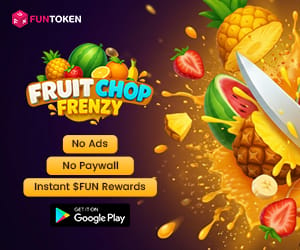
For the players who'd rather not risk a dime upfront, there's also a growing tier of free-to-play blockchain games that drop tokens for grinding, completing quests, or hitting leaderboards. No NFT mint required, no wallet top-up, no buy-in.
Where the Risks Still Live
It would be irresponsible — okay, just inaccurate — to pretend blockchain gaming is all upside. Token prices crater. Studios go quiet. Liquidity dries up. The same volatility that powers upside also powers brutal drawdowns, and a fun game can become a worthless game in a market downturn.
Smart players treat in-game tokens like any other crypto position: take profits, diversify, don't ape your rent into a pre-launch testnet beta. Knowing how to actually move earnings off a game and into something stable is half the battle. Whether that means stablecoins, a CEX off-ramp, or yield-bearing strategies, the exit infrastructure has gotten dramatically better.
What's Next for Blockchain Gaming
Looking ahead, three trends are worth watching closely. First, AI integration — not just as flavor text, but as actual gameplay logic, dynamic NPCs, and procedurally generated economies. Second, real-world asset backing, where in-game items have collateral value beyond pure speculation. Third, cross-chain interoperability, where your assets aren't trapped in one ecosystem.
Mobile-first design will keep dominating user growth, and chains optimized for high-throughput gaming (Sei, Solana, Avalanche, Ronin, TON) will keep competing for studio mindshare. Expect more partnerships like Quantra–FishWar and ANOME–ENI, where infrastructure layers stack with game studios to deliver something neither could pull off alone.
The Bottom Line on Blockchain Gaming
The narrative around blockchain gaming has shifted from "weird crypto experiment" to "legit gaming sector with real users, real economies, and real ownership." The tech is finally invisible enough for normies, the games are finally fun enough for veterans, and the payouts are finally consistent enough for grinders. It's not utopia — tokens still dump, projects still fold, and gas fees still occasionally bite — but the trajectory is unmistakable. Players own their stuff, economies are programmable, and the line between "playing a game" and "participating in an economy" is dissolving in real time. Whether you're here to compete, to collect, or just to see what all the fuss is about, this is the most interesting moment Web3 gaming has ever had. Press start.
About FT Games
FT Games is a Telegram-friendly crypto gaming platform powered by the FUN token, with daily rewards, lobby games and an active player community. Visit ft.games to start playing.